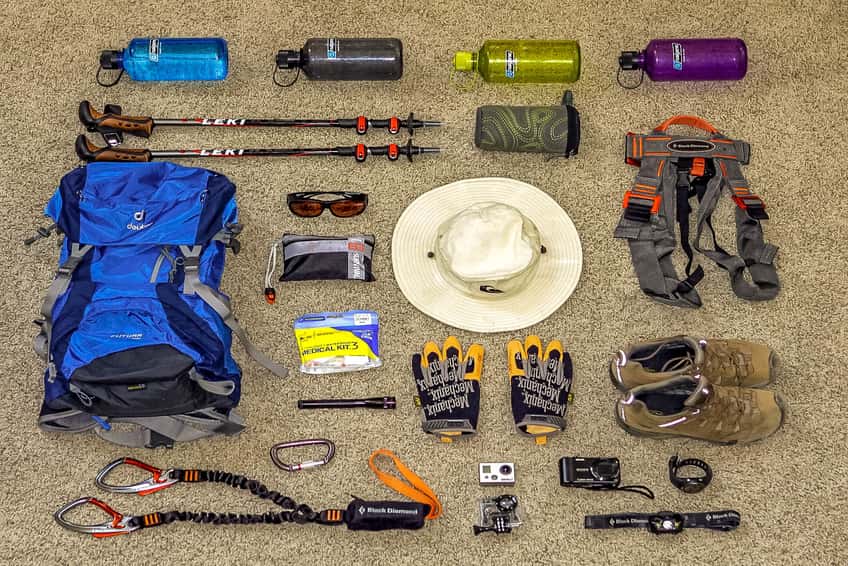
Getting your kit right is the difference between quietly enjoying a Himalayan trek and enduring it. The trails are long, the temperature can swing from t-shirt warmth at midday to well below freezing at night, and once you leave the road there is nowhere to buy the thing you forgot. So we send every trekker a personalised kit list on booking, tuned to the specific trek, season and altitude.
The list below is the backbone of that kit, grouped into six categories so you can pack — and check off — one section at a time. Aim for a single soft duffel (around 12–15 kg) that a porter carries, plus a daypack of 25–35 litres that stays with you for water, layers, snacks, camera and documents.
Two rules save most people: build a layering system rather than one heavy jacket, and break your boots in for several weeks before you fly. Everything else is refinement.
Weight tip
Porters carry a limited, insured load, so keep your duffel to the weight we specify for your trek. Wear your heaviest layers and boots on the flight in — it saves duffel weight and means you still have them if a bag is delayed.
The packing checklist
The full kit list, sorted into categories. Treat Must Have as non-negotiable, Recommendedas things you'll be glad you brought, and Optional as nice-to-haves.
Clothing & Layers
- Moisture-wicking base layer (top & bottom)Synthetic or merino wool — avoid cottonMust Have
- Fleece jacket or mid-layerFor warmth at high altitudeMust Have
- Waterproof & windproof outer jacketGore-Tex or similar recommendedMust Have
- Down jacket or insulated vestLightweight packable down recommendedMust Have
- Trekking trousers (2–3 pairs)Quick-dry fabric preferredMust Have
- Warm hat, sun hat & buffCover ears above 3,000 mMust Have
- Gloves — liner + insulatedTwo pairs for the high passesRecommended
Footwear
- Broken-in waterproof trekking bootsAnkle support is essentialMust Have
- Camp shoes / sandalsTo rest your feet at teahousesRecommended
- Trekking socks (4–5 pairs)Wool or synthetic — avoid cottonMust Have
- GaitersFor snow and scree sectionsOptional
Camping & Sleeping
- Sleeping bag (rated −10 °C or lower)Teahouse blankets are thinMust Have
- Sleeping bag linerAdds warmth and keeps it cleanRecommended
- Trekking backpack (50–60 L)Waterproof cover or pack linerMust Have
- Daypack (20–30 L)For essentials while porter carries the main bagRecommended
- Dry bags / waterproof stuff sacksKeep electronics and clothes dryMust Have
Documents & Money
- Valid passport (6+ months validity)Required for all permits and check-insMust Have
- Nepal visaOn arrival at Kathmandu airport or onlineMust Have
- Travel insurance documentsMust cover altitude & helicopter evacuationMust Have
- Passport photos & permit copiesSeveral spare passport photosRecommended
- Nepali Rupees (cash)ATMs are unavailable on most trailsMust Have
Health & Safety
- Personal first-aid kitPlus any prescription medicationMust Have
- Sun protection (SPF 50, lip balm)UV is intense at altitudeMust Have
- Glacier glasses / UV sunglassesCategory 3–4 for snowMust Have
- Water purification (tablets/filter)Refill safely on the trailMust Have
- Diamox (consult your doctor)For acclimatisation, if advisedOptional
Electronics & Extras
- Headtorch + spare batteriesFor early starts and teahousesMust Have
- Power bank (20000 mAh+)Charging is costly and unreliable on trailMust Have
- Universal travel adapterNepal uses Type C, D and M socketsRecommended
- Camera or smartphoneThe scenery deserves documentingOptional
- Trekking polesSave your knees on the descentsRecommended